
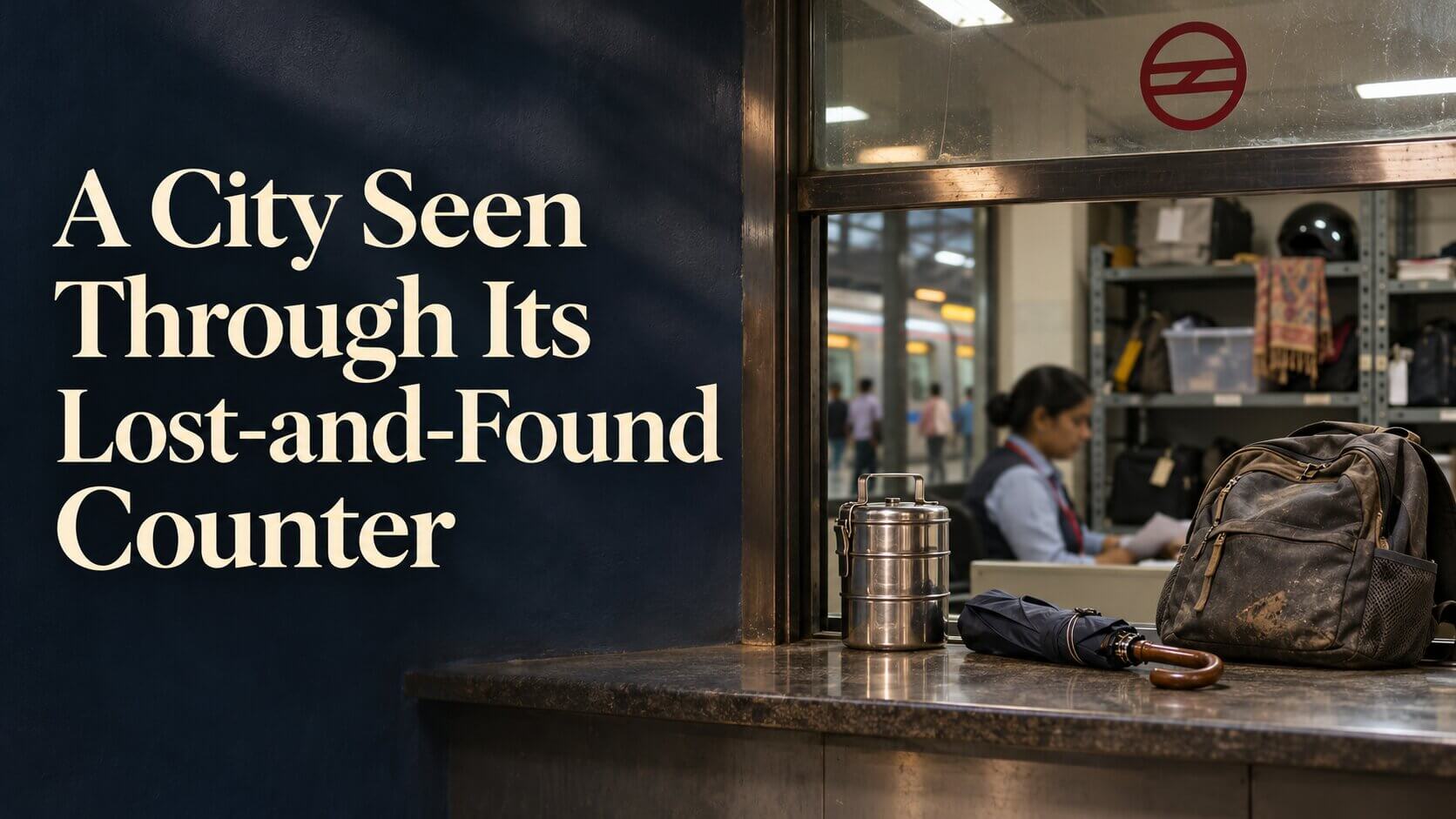
At Delhi Metro’s lost-and-found office, the things people leave behind reveal what it takes to get through an ordinary day in the capital.
A lunchbox is easy to describe until someone asks you to prove it is yours. Was it round or rectangular? Did it have two tiers or three? Was there a dent near the clasp? The details you barely notice while packing lunch in the morning are suddenly the ones you need to remember.
Delhi Metro’s lost-and-found office at Kashmere Gate offers an unusual way to look at the capital. The route map tells you where passengers can go. The belongings they leave behind offer clues about the day they expected to have. A packed lunch suggests hours away from home. An umbrella suggests a morning spent deciding whether to trust the sky. A bag can hold everything someone needs until they get back.
What Delhi packs in the morning
A Delhi Metro disposal report for January to March 2026 lists 326 bags, 162 lunchboxes, 136 purses and 24 umbrellas in a single lot of lost-and-found property. The lunchboxes stand out. Each one represents a few minutes someone spent in a kitchen before catching a train. By noon, leaving it behind can mean spending money on a meal that was already made. By evening, getting the box back can mean arranging another trip across the city.
The same calculation looks different when the missing item is a phone. In June 2026, the Central Industrial Security Force reported returning 68 mobile phones and 32 laptops over the preceding six months. A phone can be costly to replace, but the immediate worry may be smaller and more urgent. How do you call the person waiting to pick you up if their number is saved on the phone and you’ve never had to remember it?
How a forgotten bag keeps travelling
When passengers report a missing item at a Delhi Metro station, staff can send announcements to stations and trains along the relevant corridor. Valuable belongings may later be transferred to the central lost-and-found office at Kashmere Gate. A bag that slipped out of one person’s day can end up passing through the hands of several people before its owner sees it again.
That journey begins with someone paying attention. A commuter notices that the person who got off has left a bag under the seat. A staff member listens while its owner tries to remember where they last had it. The owner, who may have taken the same train a hundred times, now has to recall exactly where they stood and which doors opened.
Most journeys leave little to remember. You catch the train, change lines and go home. But if you get that lunchbox back, you might remember the dent near the clasp and the fact that, somewhere between your stop and the end of the line, somebody thought it was worth picking up.