
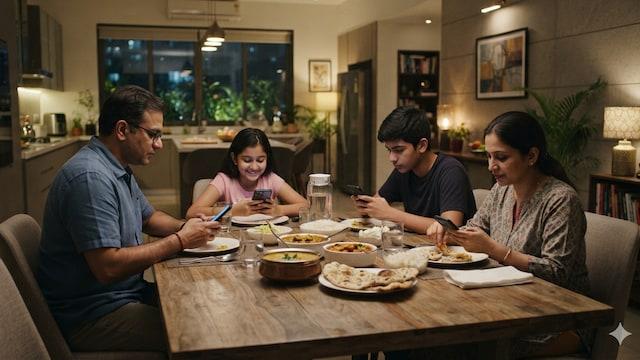
The food is still warm, the chairs are still occupied, but somewhere between glowing screens and busy schedules, the warmth of family conversations is fading.
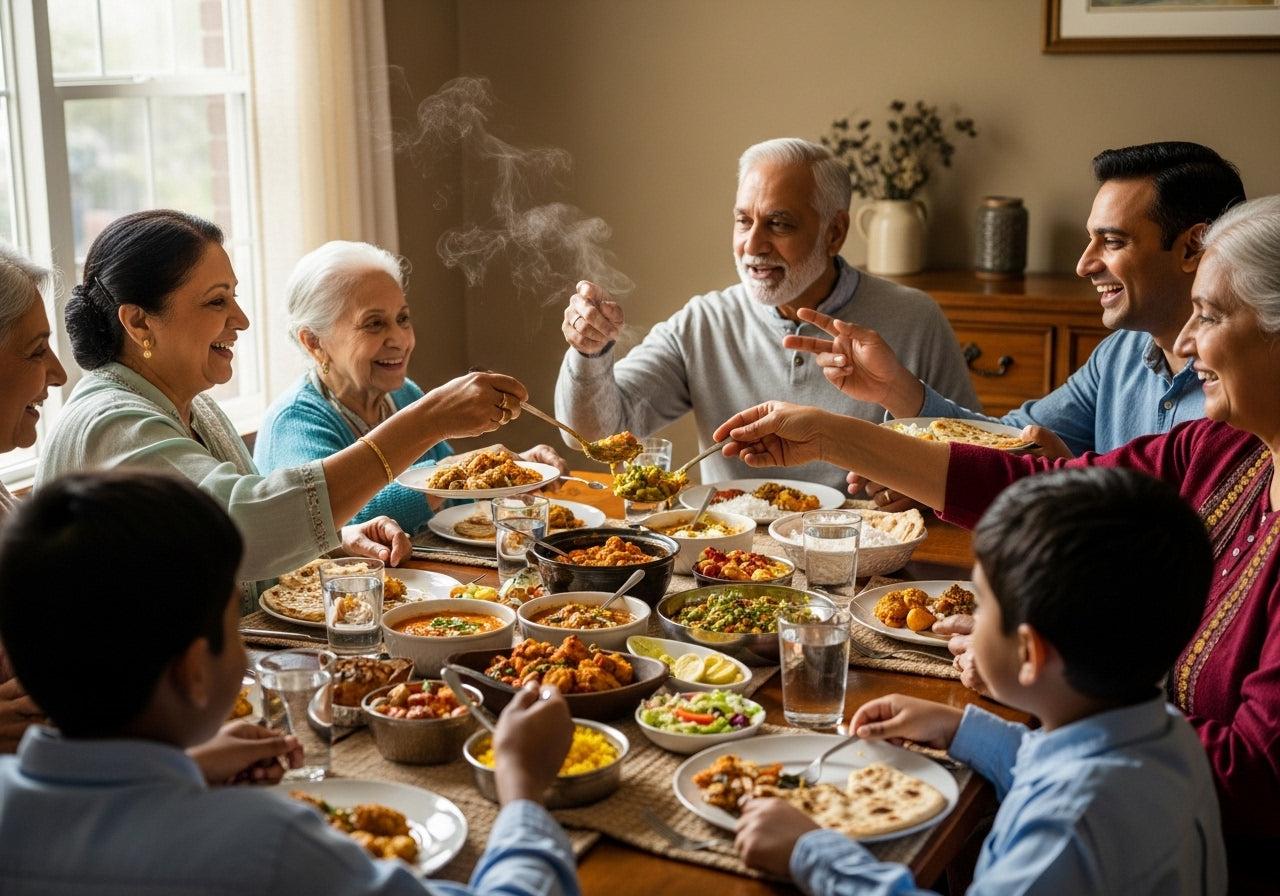
There was a time when the dinner table was more than a piece of furniture. It was a family’s gathering place, a classroom of life and a silent witness to countless memories.
Children shared stories about school. Parents discussed their experiences, while grandparents passed down wisdom through everyday conversations.
Nobody needed a notification to remind them that it was time to connect.
Today, however, many dinner tables tell a different story. Smartphones sit beside dinner plates. Television fills the silence, while family members remain occupied with their digital worlds.
The family may be sitting together, yet everyone seems to be somewhere else.
When Dinner Was More Than a Meal
In many traditional households, dinner marked the moment when individual routines became a shared experience.
It was an opportunity to discuss problems, celebrate small achievements and share laughter.
A simple question such as “How was your day?” often opened the door to meaningful conversations.
Moreover, children learned about relationships, responsibilities and family values through these everyday interactions.
The dinner table was not always perfect. Arguments and disagreements were also part of the experience. Nevertheless, it provided a space where family members could express themselves.
The Smartphone: An Uninvited Dinner Guest
Modern technology has transformed the way people communicate.
However, it has also introduced new distractions into family life.
A message from a colleague, a social media notification or an entertaining video can easily interrupt a conversation.
Gradually, these interruptions can become habits.
Instead of discussing their experiences, family members may find themselves scrolling through other people’s lives.
The irony is remarkable. Devices designed to connect people across continents can sometimes disconnect those sitting across the same table.
Busy Schedules and Fragmented Families
The disappearance of family dinners cannot be blamed entirely on technology.
Long working hours, academic pressure, commuting and different schedules also influence family routines.
Parents may return home late. Children may be occupied with homework or extracurricular activities.
Meanwhile, food delivery services and individual entertainment preferences have made separate mealtimes more convenient.
Consequently, eating together is becoming difficult for some families.
The problem is not necessarily a lack of affection. Often, it is the absence of shared time.
When Parents Know the Wi-Fi Password but Not Their Children’s Worries
Children do not always announce their emotional struggles.
Sometimes, their concerns emerge through ordinary conversations about school, friendships or daily experiences.
Shared meals can provide a natural environment for these discussions.
Similarly, adults may find comfort in discussing workplace challenges or personal difficulties with family members.
However, when everyday conversations disappear, opportunities to understand one another may also diminish.
A home can be filled with modern comforts and still lack meaningful communication.
The Indian Dinner Table: A Changing Tradition
In many Indian households, food has traditionally represented affection, hospitality and togetherness.
From serving an extra roti to sharing homemade sweets, meals have often expressed emotions that words could not fully capture.
The kitchen and dining space have also served as meeting points for different generations.
Nevertheless, changing lifestyles are gradually transforming these traditions.
Smaller households, demanding careers and digital entertainment are reshaping family routines.
While modern lifestyles offer greater independence and convenience, they also encourage families to reconsider how they preserve meaningful connections.
The Conversations That Never Happened
Imagine a child waiting to share an achievement at school. A parent hoping to discuss a difficult day. Or a grandparent remembering a story from childhood.
Now imagine those moments passing unnoticed because everyone is occupied with a screen.
Not every missed conversation creates a serious problem. However, repeated distractions can reduce opportunities for emotional connection.
Years later, families may remember the furniture they purchased or the holidays they enjoyed.