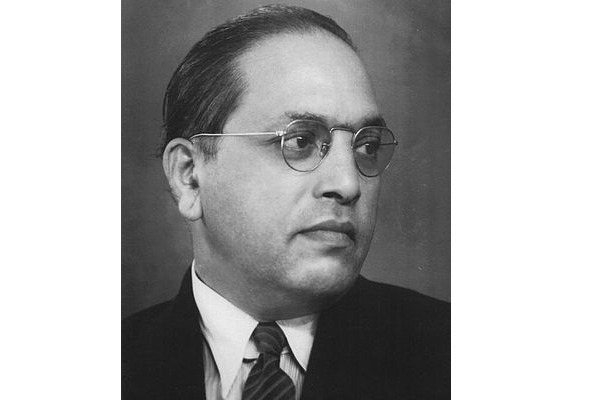
NEW DELHI: The father of Indian constitution and independent India’s first minister of Law and Justice was also an extraordinary scholar and thinker on issues of social and economic importance. He fought all his life against discrimination, degradation, and deprivation in the Indian society.
The President in his tweet said an icon of our nation, Dr. Ambedkar was a multifaceted personality who waged a life-long struggle for a modern India free of caste and other prejudices.
Prime Minister Narendra Modi greeted citizens on the occasion of Baba Saheb’s birth anniversary. He tweeted and said. Pujya Babasaheb gave hope to lakhs of people belonging to the poorest and marginalized sections of society.
Dr. Ambedkar was born on April 14, 1891 in the military cantonment of Mhow which is now in Madhya Pradesh. His father, Ramji Maloji Sakpal had 14 children and Ambedkar was his last child. His mother was Bhimabai Sakpal and she was daughter of Laxman Murbadkar.
Ambedkar’s first wife Ramabai died in 1935 after a long illness. After completing the draft of India’s constitution in the late 1940s, he suffered from lack of sleep, had neuropathic pain in his legs, and was taking insulin and homoeopathic medicines. He went to Bombay for treatment, and there met Dr. Sharada Kabir, whom he married on 15 April 1948, at his home in New Delhi. Doctors recommended a companion who was a good cook and had medical knowledge to care for him. She adopted the name Savita Ambedkar and cared for him the rest of his life. Savita Ambedkar, who was called ‘Mai’ or ‘Maisaheb’, died on May 29, 2003, aged 93 at Mehrauli, New Delhi.
Dr. Ambedkar’s family hailed from the town of Ambadawe in Maharashtra and the family belonged to Mahar caste- considered to be a brave martial caste but were treated as untouchable dalits.
Ambedkar’s ancestors and his father had worked in the British Indian Army at the Mhow cantonment. He became the only untouchable to get enrolled at the Elphinstone High School and later to the Elphinstone College. He obtained his degree in economics and political science from the Elphinstone College, affiliated to the University of Bombay, present-day University of Mumbai.
He pursued his Masters in Economics at the Columbia University and Doctor of Science in Economics from London School of Economics with the help of a scholarship.Ambedkar participated heavily in social movements beginning from this period.
He began public movements and led a march to make available drinking water in villages for the untouchables. There was also the struggle organised by him to gain the right of worship for dalits and lower castes in temples as they were not allowed to visit temples then.
He was awarded the Bharat Ratna posthumously in 1990. The United Nations (UN) celebrated his 125th birth anniversary which was in the year 2016 and called him a “global icon.”