
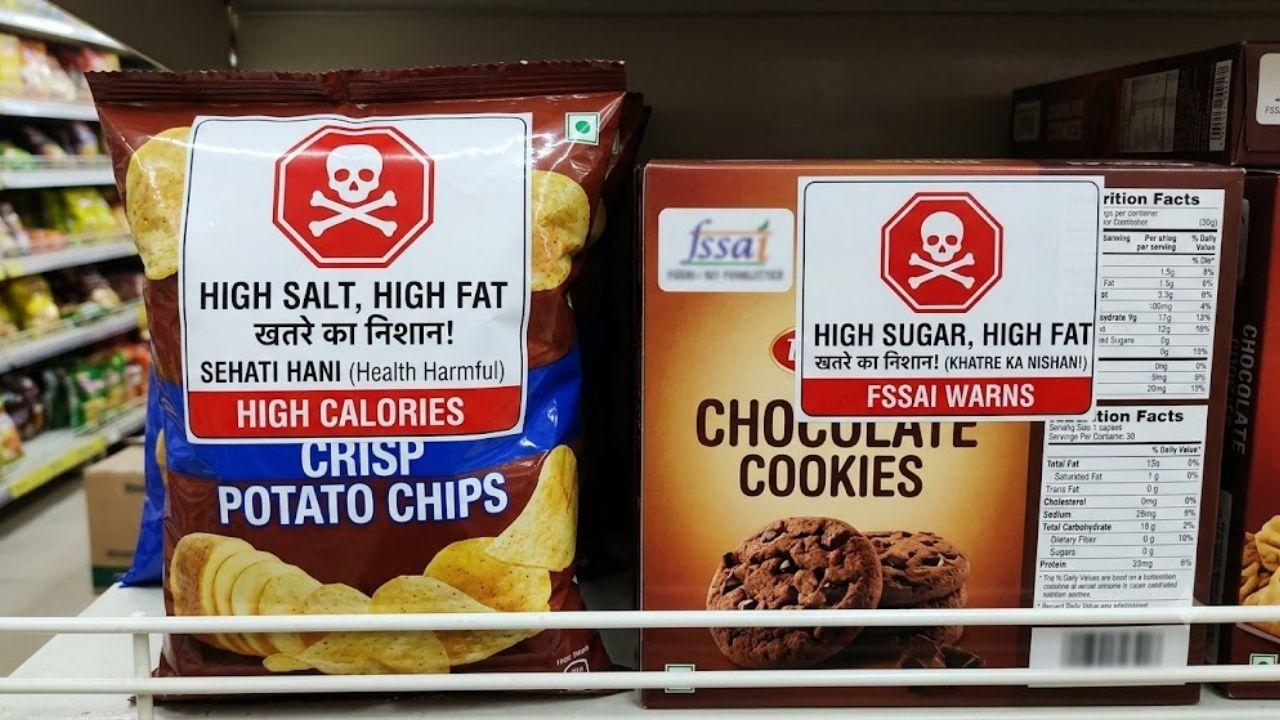
Landmark public health judgment in the case involving 3S and Our Health Society strengthens consumer rights, nutritional transparency and informed food choices.
New Delhi, November 26, 2026: In a significant decision concerning public health and consumer protection, the Supreme Court of India has issued comprehensive directions on warning labels for packaged foods.
The apex court directed the Food Safety and Standards Authority of India (FSSAI) to ensure clear and separate warnings for products containing excessive sugar, salt and saturated fat.
A bench comprising Justice J.B. Pardiwala and Justice K. Vinod Chandran delivered the judgment in a matter arising from a petition filed by 3S and Our Health Society.
The decision emphasises the importance of protecting public health through accessible nutritional information. Moreover, it recognises the need to empower consumers to make informed dietary choices.
3S and Our Health Society’s Public Health Initiative
The petitioner, 3S and Our Health Society, highlighted the growing health risks associated with foods high in sugar, salt and saturated fat.
The organisation drew attention to the relationship between unhealthy dietary patterns and non-communicable diseases (NCDs). These include diabetes, obesity, hypertension and cardiovascular diseases.
Through its petition, the organisation advocated for an effective Front-of-Pack Nutrition Labelling (FoPNL) framework.
Instead of relying on complex nutritional figures, the petitioner supported a warning-based system. Such a system would allow consumers to identify excessive levels of nutrients of concern quickly.
Following extensive proceedings, the Supreme Court has issued detailed directions to strengthen the proposed framework.

Separate Red Hexagonal Warning Labels
One of the most significant aspects of the judgment concerns the design of the proposed front-of-pack warning labels.
The court directed FSSAI to ensure separate hexagonal warnings for each relevant nutrient exceeding its prescribed threshold.
The warnings will include:
- HIGH SUGAR
- HIGH SALT
- HIGH FAT
Each warning must also contain a corresponding standardised pictorial representation.
Furthermore, products exceeding the thresholds for multiple nutrients must display separate warning symbols. A single combined hexagon will not be sufficient.
This approach is intended to improve accessibility, including for consumers who may struggle to understand complex nutritional information.
Total Sugars and Saturated Fat to Form the Basis
The Supreme Court also directed FSSAI to reconsider the nutrient thresholds used in the proposed framework.
The regulator must consider total sugars and saturated fat, rather than added sugar and added fat, alongside salt.
Consequently, FSSAI must reformulate the threshold levels using scientific evidence.
The court cautioned against thresholds that are excessively low or high.
Extremely low thresholds could result in widespread warnings and consumer desensitisation. Conversely, excessively high thresholds could allow unhealthy products to escape appropriate warnings.
Warning Labels Must Be Prominent and Readable
The court emphasised that warning labels must be conspicuous and easily understood under normal purchasing conditions.
Drawing upon international practices, it directed FSSAI to ensure appropriate proportional sizing of each hexagon. The judgment referred to a minimum of 4% or 5% of the principal display panel, unless explicit reasons justify a different approach.
Additionally, the regulator must prescribe a suitable font size for the warning text.
These measures aim to ensure that essential health information remains visible and accessible to consumers.
India’s Growing Non-Communicable Disease Burden
The judgment highlights the serious public health challenges associated with non-communicable diseases in India.
According to research cited by the court, NCDs account for approximately six million deaths annually. They represent roughly 63% of annual deaths in the country.
The court also referred to estimates for 2021 from the ICMR-INDIAB study.
The study estimated that:
- 101 million people had diabetes.
- 136 million people were pre-diabetic.
- 315 million people had hypertension.
- 254 million people had generalised obesity.
- 351 million people had abdominal obesity.
These figures underline the importance of preventive healthcare and effective nutritional policies.
Furthermore, the judgment highlights the vulnerability of children and adolescents to unhealthy dietary environments.
Right to Health and Informed Food Choices
The Supreme Court examined the constitutional framework surrounding the right to health, the right to food and informed decision-making.
Article 21 of the Constitution provides the foundation for these rights. Meanwhile, Article 47 places responsibilities on the State to improve nutrition and public health.
The judgment explains that protecting health requires more than providing access to medical treatment.
Preventive measures, healthier food environments and accessible consumer information are also essential components of public health protection.
Therefore, warning-based nutritional labelling serves as an important regulatory intervention.
FSSAI to Adhere to Its Proposed Four-Month Timeline
FSSAI informed the court that approximately four months would be required to complete the regulatory process.
This process includes publishing draft regulations, inviting stakeholder comments for 60 days, examining feedback and completing the final notification procedure.
The Supreme Court considered the proposed timeline reasonable. However, it directed the regulator to adhere to it strictly.
The court also accepted the proposed 365-day transition period for food business operators following notification.
Nevertheless, FSSAI must prevent misuse of this period and monitor compliance.
Further extensions should ordinarily not be granted. Non-compliant food businesses must be dealt with in accordance with the law.
Monitoring Artificial Preservatives and Product Reformulation
The judgment also addresses the potential reformulation of packaged foods following the introduction of warning labels.
FSSAI must closely monitor whether manufacturers use artificial preservatives or other additives in ways that undermine the objectives of the labelling framework.
Where necessary, the regulator must take appropriate action through the statutory process.
Furthermore, FSSAI must prepare a clear and comprehensive list of solid and liquid food products exempted from the framework.
The court also directed that beverage category descriptions should not use labels that could be confused with nutrient warning symbols.
Nutritional Literacy for Schoolchildren
Another important aspect of the judgment is its emphasis on children’s nutritional education.
The Supreme Court directed the Union government to ensure strict implementation of the Food Safety and Standards (Safe Food and Balanced Diets for Children in School) Regulations, 2020.
In addition to curriculum improvements, the government must provide opportunities for practical nutritional learning.
These may include interactive workshops, extracurricular activities and exercises that teach children to understand food labels.
The objective is to enable young consumers to make healthier choices independently.
Supreme Court to Review Progress After Ten Weeks
The Supreme Court directed its Registry to list the matter after ten weeks.
FSSAI must submit an affidavit explaining the progress made on the draft regulations.
Additionally, a copy of the judgment will be forwarded to the Principal Secretary of the Ministry of Health and Family Welfare.
The matter will remain part-heard for the limited purpose of reviewing regulatory progress.
A Significant Milestone for India’s Public Health Movement
The judgment in the matter involving 3S and Our Health Society marks an important development in India’s food safety and consumer protection framework.
Rather than prohibiting consumer choices, the warning-based system seeks to make those choices more informed.
Its ultimate effectiveness will depend on the final regulations, timely implementation and enforcement.
Nevertheless, the decision sends a clear message: essential health information should not remain hidden behind complicated nutritional tables or attractive packaging.
Every consumer deserves to know what they are eating. Clear information can lead to better choices, healthier families and a healthier nation.