By: Dr. Abhishek Kumar Pandey, Asstt. Editor-ICN LUCKNOW: Bruxism is a repetitive jaw-muscle activity characterized by clenching or grinding of the teeth. It is a clinical phenomenon that can manifest in both children and adults. Bruxism has 2 distinct circadian manifestations: it can occur during sleep (indicated as sleep bruxism) or during wakefulness (indicated as awake bruxism). Bruxism is oromotor activity (clenching/grinding) that is most likely to occur at the transition of deeper to lighter sleep. Etiology is mainly dependent on central factors (stress sensitivity, emotions, personality features, sleep regulation,…
Read MoreCategory: HEALTH
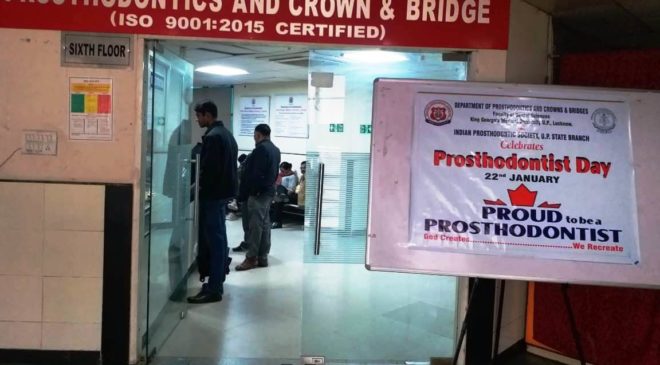
Prosthodontist Day Celebrated In King George Medical University Lucknow
By: Dr. Pankaj Kumar Yadav, Asstt. Editor-ICN LUCKNOW: World Prosthodontist day was celebrated in the department of Prosthodontics of king George’s ,Medical University on 22nd Jan 2019. The importance of this department in the field of dentistry was discussed by Head of the Department Prosthodontics Professor Pooran Chand. On this occasion, Professor Pooran Chand said that the beginning of dental sciences or dentistry has been done by duplicating and replacement of teeth and other related structures. According to them, all the organs of our body have special significance. Similarly teeth…
Read MoreDENTASCAN-A DIAGNOSTIC BOON
By: Dr. Abhishek Kumar Pandey, Asstt. Editor-ICN LUCKNOW: In the past, dental disease and lesions involving the jaw were either evaluated by plain radiography or tomography. The advent of spiral computed tomography (CT) and Denta Scan is changing the imaging trend. Denta scan is a computed tomography (CT) software program that allows the mandible and maxilla to be imaged in three planes: axial, panoramic and cross-sectional. It is an interactive CT imaging software that combines the power and detail of CT imaging with the convenience of interacting with the images…
Read MoreDiabetes: Stress Free Life And Sleep Well
By: Dr. Nosheen Ali, Bureau Chief-ICN Madhya Pradesh BHOPAL: Diabetes mellitus is known as “SIPHONING OFF SWEET WATER. It means excess sugar is found in blood as well as urine. D-Decrease Anabolism cause increase thirst (polydipsia) I-insulin secretion reduced, and increases Glucose Production A-Always Hungry, thirsty. B-Blurry Vision (Blood sugar (Glucose) high) E- Eating disorder first sign. T-Tingling and Numbness in Hands & Feet’s E-Enuresis Nocturnal S-Sudden weight Loss In the case of diabetes, there are two kinds of complications. The first kind happens quickly and can be dealt with…
Read MoreStem Cells May Be Secret to Regenerating Fingers and Toes
By: Dr. Pankaj Kumar Yadav, Asstt. Editor-ICN Mammals can regenerate the very tips of their fingers and toes after amputation, and now new research shows how stem cells in the nail play a role in that process. LUCKNOW: A study in mice, detailed online today (June 12) in the journal Nature, reveals the chemical signal that triggers stem cells to develop into new nail tissue, and also attracts nerves that promote nail and bone regeneration. The findings suggest nail stem cells could be used to develop new treatments for amputees, the…
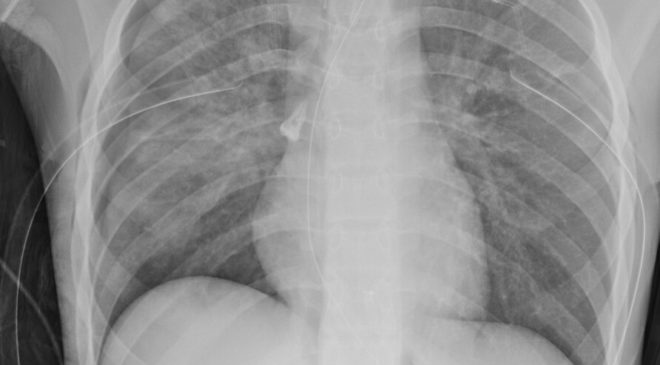
Read More“Ingestion/Aspiration Of Dental Foreign Body- “A Dental Nightmare”
By: Dr. Abhishek Kumar Pandey, Asstt. Editor-ICN LUCKNOW: Ingestion of dental foreign bodies is common. Sometimes it may cause serious and fatal injury to the airways and gastrointestinal tract. The complications of foreign body ingestion depend on size and shape of object, its sharpness and anatomical location of ingestion. The major complication of foreign body ingestion is obstruction and perforation. Perforation is especially dangerous in the oesophagus. Radiographs remain the mainstay of initial foreign body detection, especially if the object is related to dental material. When swallowing of a foreign…
Read MoreFemale Menopause Vs Male Menopause
By: Dr. Nosheen Ali, Bureau Chief-ICN Madhya Pradesh BHOPAL: Menopause is the process through which a woman ceases to be fertile or menstruate. It is a normal part of life and is not considered a disease or a condition. Most women reach menopause between the ages of 45 and 55, but menopause may occur as earlier as ages 30s or 40s, or may not occur until a woman reaches her 60s. Stages of Menopause- Pre-menopause stage-The 3-5 year period before menopause when your estrogen and hormone levels begin to drop is called perimenopause. You typically enter into perimenopause in your late…
Read MoreICN Media Group Organised A Workshop On Sleep-It’s Body Repair Time At Nirvan Hospital Lucknow
LUCKNOW: Dr. Sanjay Kumar Agarwal, Senior Associate Editor of ICN Digital Media and popularly known as Time and Goal guru, conducted his signature workshop titled ‘Sleep – It’s Body Repair Time’ before the doctors of Nirvana and among the presence of senior delegates of ICN Digital Media. The program was organised by ICN Digital Media Group. During the presentation, Dr. Sanjay Kumar Agarwal revealed the methodologies to improve sleep patterns. He laid stress upon the points that it is necessary to spend the day in more restful manner. He also…
Read MorePneumonia: Prevention Is Better Than Cure
By: Dr. Samayug Bhowmik, Bureau Chief-ICN West Bengal KOLKATA: Winter has just set in.Now many of us are experiencing cough and cold with or without fever which is often ignored. Gradually when it progresses to develop more intense complication, the victim lands up in a doctor’s chamber. But owing to this delay, the disease affects the lungs and often manifests into Pneumonia. Pneumonia is an infection of the lungs that may cause severe illness in people of all ages. It is a life threatening condition and a leading cause for death worldwide.…
Read MorePotassium Series: Part 4
By: Dr. Ameya Tripathi, Associate Editor-ICN LUCKNOW: In our previous articles we discussed in details about how potassium is important for our body functions and how its excess is dangerous for us. Now we want to look at the deficiency of potassium and its associated conditions. Hypokalemia As we have discussed in our previous article, the optimal amount of potassium in our blood serum is 3.5 to 5.0 mmol/L. whenever its level falls down below 3.5 mmol/L then the condition is known as Hypokalemia. Hypokalemia is also termed as hypokalemic syndrome,…
Read More