Beyond GDP figures and stock market headlines, a quiet economic transformation is reshaping how humanity earns, spends, works and dreams.
Imagine a young designer in India working for a company in Europe, a farmer receiving payments through a smartphone, and a small-town entrepreneur selling handmade products to international customers.
These are no longer extraordinary possibilities. They represent the changing face of the world economy.
As 2026 draws to a close, the global economy stands at an interesting crossroads. Technology is creating opportunities, geopolitical tensions are challenging international trade, and millions of people are redefining their relationship with work and money.
The world is not simply experiencing an economic transition. It is witnessing a transformation in the way value is created.
The World Economy in 2026: Growth Amid Uncertainty
According to the International Monetary Fund’s October 2026 World Economic Outlook, global economic growth is projected at 3.1% in 2026 and 3.4% in 2027.
However, economic progress remains uneven across countries. While some economies benefit from technological investment, others face rising energy costs, debt pressures and trade uncertainties.
The biggest challenge is not merely generating economic growth. It is ensuring that its benefits reach ordinary citizens.
When Technology Becomes the New Currency
For centuries, economic power depended heavily on land, natural resources and industrial production.
Today, knowledge, data and innovation are becoming increasingly valuable economic assets.
Artificial intelligence is transforming industries, from healthcare and education to manufacturing and financial services. Moreover, digital platforms allow small businesses to reach customers across geographical boundaries.
However, technological progress also creates new responsibilities. Workers must develop new skills, businesses must adapt, and governments must address the risks of digital inequality.
The economies that invest in people alongside technology may be better prepared for the future.
The Changing Geography of Economic Power
The global economic landscape is gradually evolving.
Traditional economic powers continue to influence international markets. Meanwhile, emerging economies are expanding their role through manufacturing, digital services, entrepreneurship and growing consumer markets.
India, in particular, offers an interesting example of this transformation. Its digital payment ecosystem, young workforce and entrepreneurial ambitions are creating new possibilities.
Furthermore, countries across Asia and Africa are exploring opportunities to participate more actively in global supply chains.
Economic influence is becoming increasingly distributed, although significant inequalities remain.
From Local Markets to Global Customers
A small business no longer needs a physical presence in every country to reach international buyers.
A traditional artisan can sell products online. A software developer can collaborate with international clients. Similarly, a content creator can build an audience across continents.
This transformation is opening new doors for entrepreneurs outside major metropolitan cities.
However, affordable internet access, financial literacy, reliable infrastructure and digital security remain essential.
The next generation of global businesses may emerge from places that once appeared insignificant on economic maps.
The Hidden Economy of Everyday Life
Economic reports often focus on inflation, interest rates, currencies and market performance.
Yet, the real impact of these numbers is experienced in ordinary households.
A family adjusting its grocery budget, a student searching for employment and a shopkeeper managing rising expenses all experience different sides of the same global economy.
Therefore, economic success should not be measured exclusively through national income.
Affordable healthcare, quality education, employment opportunities and financial security are equally important indicators of meaningful progress.
An economy becomes truly successful when prosperity improves the quality of everyday life.
Green Energy: The Economics of a Sustainable Future
Climate change is increasingly influencing economic decisions.
Countries are investing in renewable energy, electric mobility and sustainable infrastructure. Meanwhile, businesses are reconsidering how they consume resources and manage waste.
The green transition offers opportunities to create industries and employment. However, it also requires substantial investment and careful planning.
Economic development and environmental protection need not be opposing goals.
Instead, the future may depend on finding practical ways to achieve both.
The Future of Work Is Being Rewritten
The traditional idea of spending an entire career in a single profession is gradually changing.
Remote work, freelancing, digital entrepreneurship and artificial intelligence are reshaping employment opportunities.
As a result, continuous learning is becoming increasingly important. Communication, creativity, problem-solving and adaptability may become as valuable as technical qualifications.
Nevertheless, the changing workplace also raises concerns about job security, income stability and workers’ rights.
The future of work must balance technological efficiency with human dignity.
Can Economic Growth Make the World Happier?
The world has developed sophisticated ways to measure wealth. However, measuring human well-being remains a more complex challenge.
A country may achieve economic growth while its citizens struggle with housing costs, stress and financial insecurity.
Similarly, technological advancement does not automatically guarantee a better quality of life.
The next chapter of the world economy must therefore consider a broader definition of prosperity.
Economic policies should not simply create wealth. They should also create opportunities, reduce barriers and help people live with greater security and dignity.
Beyond Numbers: The Human Future of the World Economy
As the world moves towards 2027, the global economy faces both extraordinary possibilities and serious challenges.
Artificial intelligence, digital connectivity and sustainable industries offer new opportunities. Meanwhile, inequality, geopolitical uncertainty and economic instability demand thoughtful responses.
The future will not be determined by technology or financial markets alone. It will also depend on the choices made by governments, businesses and individuals.
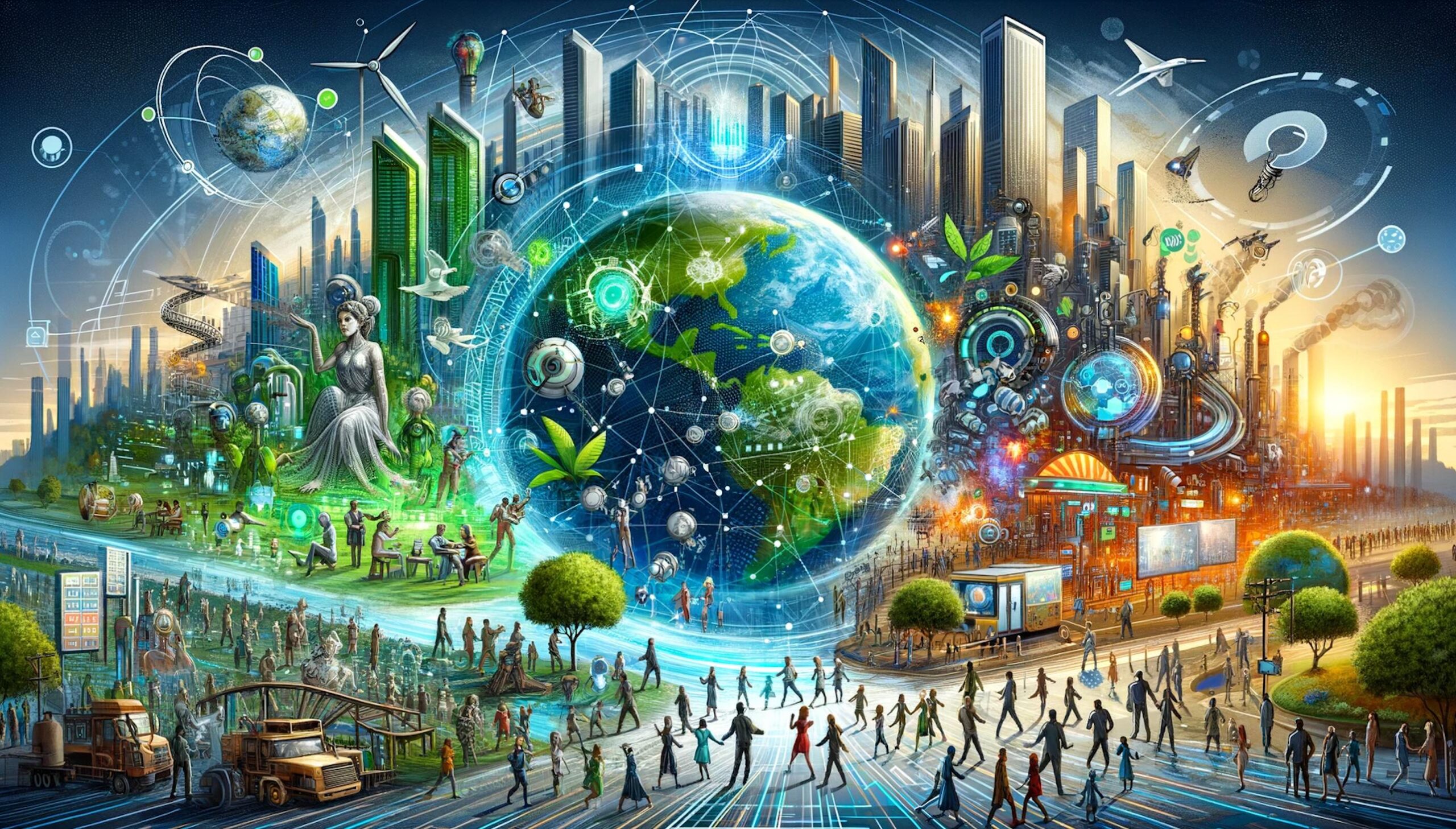
Ultimately, the world economy is not merely a system of money, markets and trade. It is a network of human ambitions, relationships and dreams.
The greatest economic achievement of the future will not simply be creating a wealthier world, but creating a world where more people have the opportunity to prosper.